Orah: The Insidious Temptation of False Robustness in Software-Based Solutions
May 5, 2026
I transferred to a new school in Ohio this year. The school has been truly great in many ways, but as soon as I settled in, I was hit with the managerial blunder of the leadership’s fervent implementation of Orah.
Orah
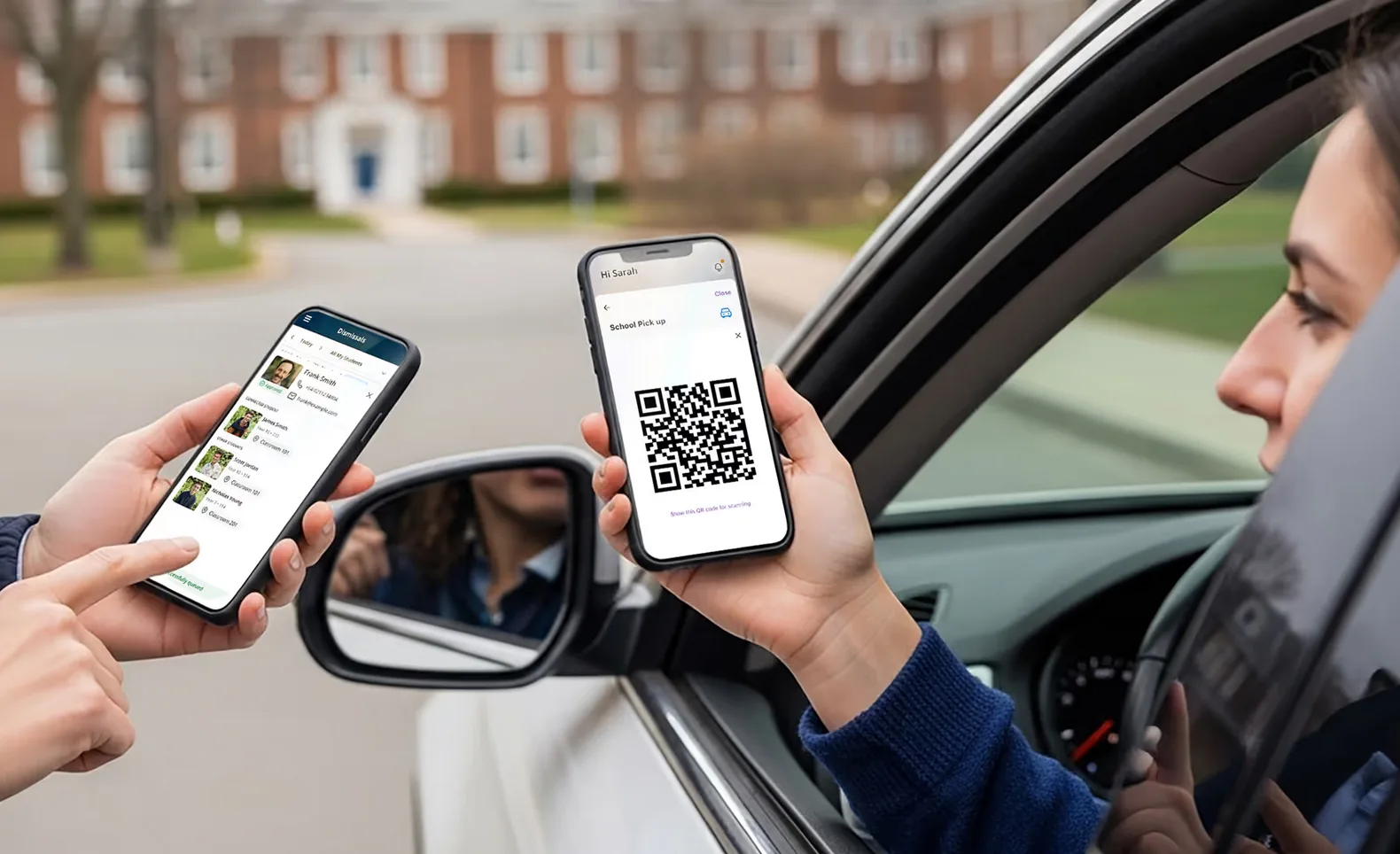
I’d like to talk to Mr. Trank Snith, please.
Its registered NZBN is 9429041058619, if you want to look them up.
Orah is a self-proclaimed “school safety platform,” which is maintained by Boardingware International Limited, a small, private company. It was registered in Auckland, New Zealand, a country famous for their fully online registration policy which requires minimal documentation, with the company’s address still listed where a luxury restaurant and wedding venue now stands. You know you are in for a seamless integration experience when the company home page rotates between AI-generated images of happy students smiling with UI screenshots terribly photoshopped on, and especially when it exemplifies such impeccable traffic safety practices as a student pulling up a QR code when driving out of the school.
The problem with Orah is that it does not work. Even if it worked, the solution would still be impractical and possibly dangerous, but it just straight-up-frankly-for-real-seriously does not work at all.
Orah is meant to solve a few problems. Teachers need to take attendance fast, preferably automatically. The residential team needs to know where boarding students are. Students need to get emergency alerts reliably. The leadership needs a unified system to approve and track field trips, off-site extracurricular activities, boarder travel requests, and parent endorsements. Orah takes on the heroic task of amalgamating these requirements, working just often enough that it tricks you into thinking the problems are going to be solved eventually.
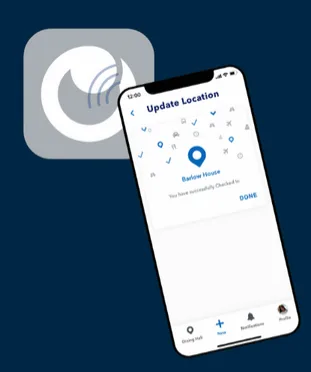
They are just regular passive NFC tags.
Attendance is based on NFC tags installed in every classroom. Orah mandates every student to use an NFC-enabled smart phone, and aggregates read events (“tile-in” actions) to a school faculty client. Attendance is updated automatically if the server detects a student’s recent interaction with the NFC tag. If the student is excused from a class period, they have to be labeled as excused with a specified purpose and time duration (a “pass”) by faculty members in charge of it. Residential students who wish to go off-campus apply for a “pass,” which becomes approved once it obtains parent endorsements and then staff endorsements. It becomes active with when it is activated manually by a faculty member or when the student “tiles in” at a physical NFC tag with the activation option selected; it is then ended with manual action or when the student “tiles in” again at a physical NFC tag. Parental approval is based on information on manually maintained student profiles, and parents confirm their endorsements through their own Orah clients. Emergency alerts are sent to student clients with options to confirm a student’s location and safety, and faculty members complete the roll call on their own clients. Residential staff members likewise complete roll calls at designated times in the dorms.
It seems to be a sophisticated system that solves all problems at once where management becomes effortless when user privileges are nicely controlled and when every single human being in the school becomes tightly-machined metal gears synchronizing in every move that culminates in a systematic, intricate dance. Why does it not work? To me, the better question is this: why should anyone expect this to work?
False Robustness
There are indeed many moving parts, and Orah does not always handle all edge cases correctly, even when nobody makes any mistakes. But it is easy to see that correct location labeling of any one student at any one given time depends on correct inputs from way more than just a few people. It requires an impossible level of procedural compliance. It is impossible for Orah to work.
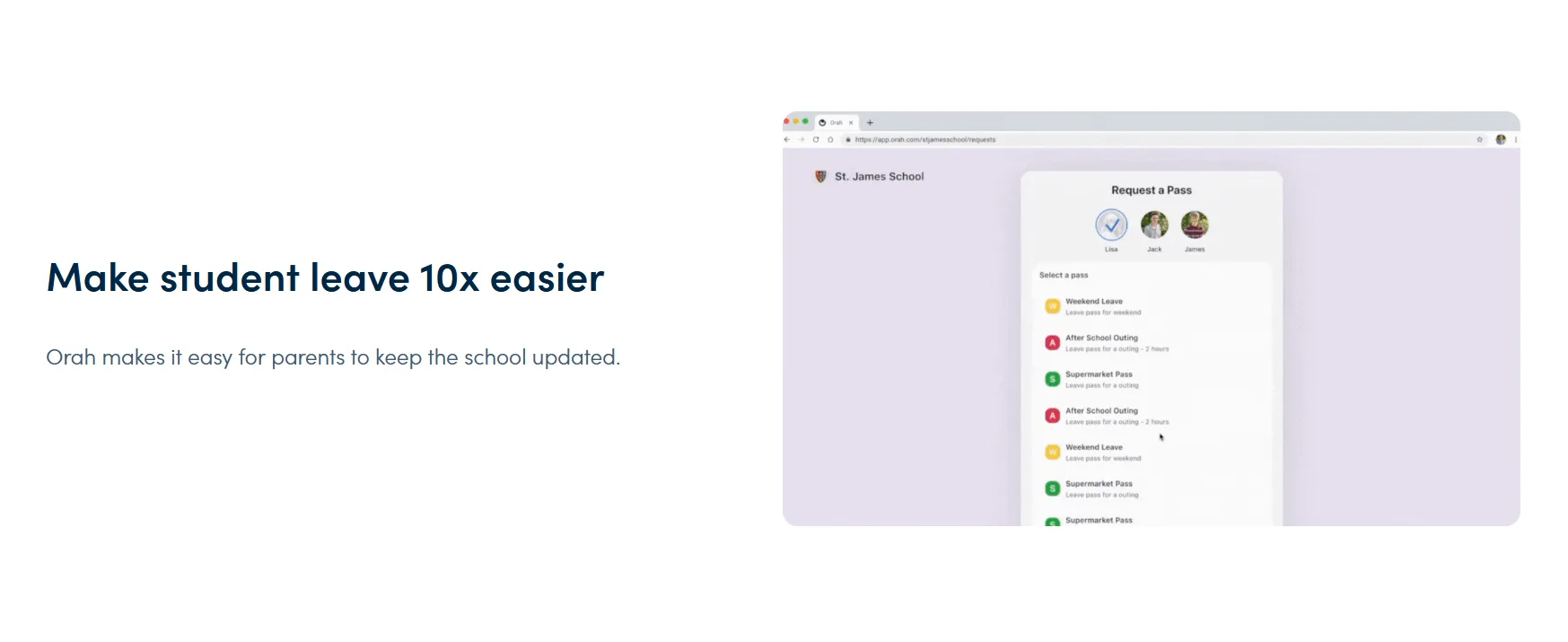
They must have the fabled 10x reverse user retention engineer!
Let me give a few examples. We have an unusually high percentage of international students whose parents live in other countries and time zones. Orah is not available everywhere. Orah is not localized for many languages. Orah wants to send emails that certain non-US email providers refuse to process. Orah does not understand international phone numbers. Orah would like to track and compare your IP address to make sure a student is not approving their own pass on the same device. Orah does not understand information sent from censored parts of the internet, which exists in more countries than the average U.S. citizen can name.
The IP tracking practices are confirmed in their Cloud Security Whitepaper. Yes, they are on AWS.
I have personally been given a few automated infractions throughout the year. One time, my “pass” has been accidentally ended by a school nurse which resulted in my account stacking up with an entire day of unexcused absences that equaled 10 hours of detention. Orah’s confident accusation took a few days to undo. Not too long ago, I missed a class period to do some technical theater work, which all relevant people were informed of, but Orah shenanigans still resulted in my parent getting a bureaucratically worded email about my infraction.
My father passed away in February this year. I believe faculty members were quickly informed of this, but Orah kept imploring me to ask for a dead person’s endorsement. I, although it was the last thing I wanted to bring up with someone else, asked for my profile to be changed as soon as possible. I kept asking for a month, and it was finally fixed. Ever since that happened, my mom always showed up twice on endorsement lists in Orah.
These are not insane, inconceivable edge cases; these are things that occur regularly in a small school. From my time teaching ESL to primary school students and from my time being a student, I believe education has fascinating formative influences on people. Most students live in incredibly small worlds—the choices available to them are decided by a very small group of people. The limited number of people, places, and institutions they interact with inevitably start to take unbelievable importance because the world you do not have access to might as well not even exist for you. Small infrastructural obstacles can seem like insurmountable boulders. This is the consequence of false robustness.
Well, it is still enough of an inconvenience that I wrote this whole thing.
To me, Orah problems are mostly just inconveniences that I feel annoyed having to give nonzero time and energy to address. It is a solution to the intertwined, complex system of school management with another more frustratingly intertwined, complex system. I believe it is common sense that systems like Orah which depends on correct input fail at the weakest link. It does not matter if the links are hidden with a sleek user interface when the links are real people with people lives and people problems logging into a software ten times a day.
Insidious Temptations
Orah is dumb, but its absurdity is mirrored in many more supposed solutions to issues.
Managing schools is understandably difficult. Orah provides software that models this complex problem, in which procedures that require actions from faculty members become abstractions like “passes,” “tiles,” and “endorsements.” From a system design standpoint, abstractions are not productive if they do not come with a set of implied constraints on the sorts of actions you can do with the abstract objects. Naturally, Orah cannot offer infinite customizations and flexibility; it is optimized for the company’s idea of a conventional use case.
However, a system that solves issues in another system is still just a solution; the solution’s existence does not justify itself. There is a balance between the complexity, or the upkeep of the solution and the complexity of the problem itself. For more personal tasks, this balance is usually incredibly variable. Some people get by remarkably well without any sort of task management, while others are motivated by the process of writing carefully planned-out bullet journals. In an organization, however, this balance is usually narrow and completely dependent on what individual members tolerate. It is painstakingly obvious when it goes wrong.
A system’s complexity might not be obvious at first. Orah is sleek and somewhat user-friendly but extremely complex to manage. An opposite example is Johnny Decimal; it might look intimidating but usually only needs about a day to set up and minimal time to maintain.
People nevertheless stick to these systems. There are the obvious factors like sunk cost and the simple fact that people who provide solutions for money want you to stay dependent on it, but there is also a subtle, insidious temptation of contrived systems—it provides comfort. It is a convenient wall of impenetrable bureaucracy to hide behind. After all, if individual links are connected by the system, of course we can just blame the weakest link when it fails! One does not have to take on very much accountability at all when people inevitably make provable mistakes.
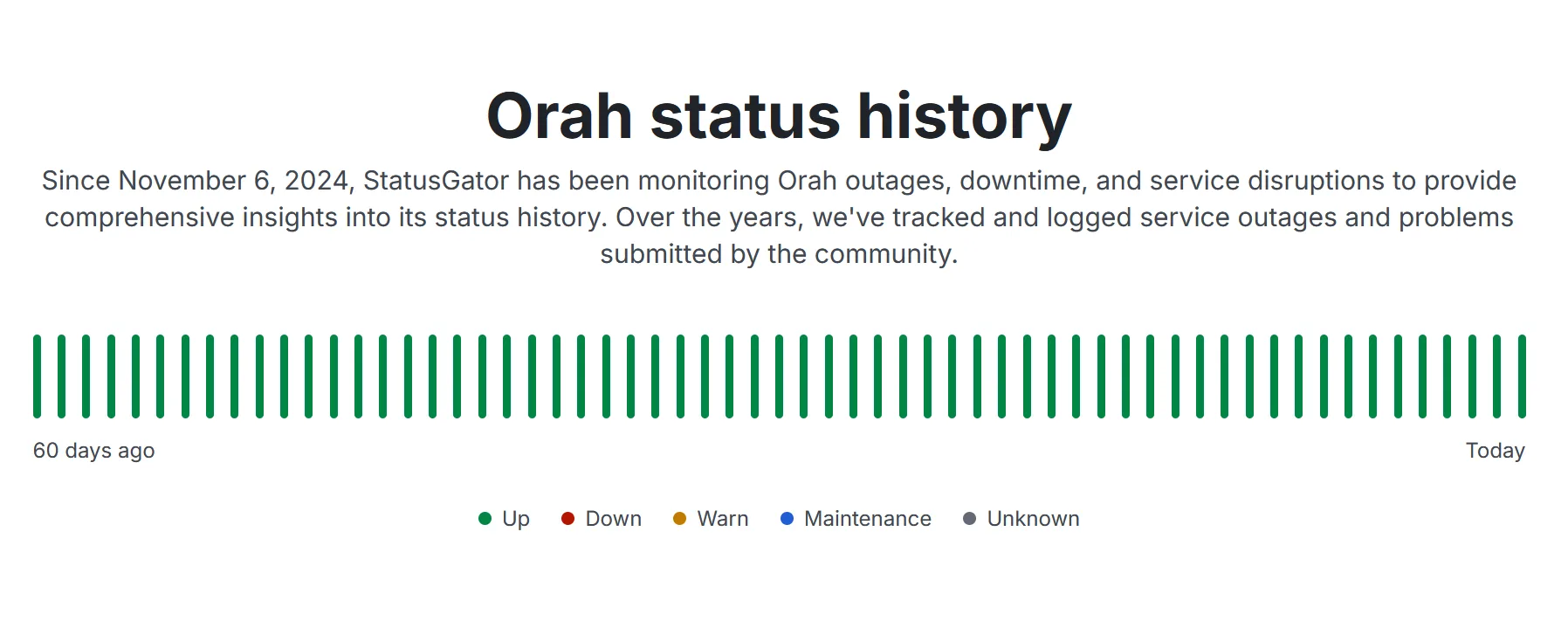
Come on! It’s not even a real status page.
And of course the system gets better as time goes on. Maybe people will even stop making mistakes! Orah probably will improve in the practicality standpoint, but us participants bear the burden of user testing. Every edge case we encounter and struggle with is something that Boardingware International Limited should have fixed long ago, yet the school pays subscriptions to the company, who in turn gets real user data instead of having to do good old fashioned grown-up software engineering with unit testing and whatever kind of design awareness that has been paraded around the magnificent seven tech companies these days.
To school faculty if you are reading this: do not get any ideas about AI developed all-in-one student management software.
At the time of writing, web applications assembled by AI agents are definitely on the brink of being good enough. As people begin to realize the unbelievable ease of building haphazard, contrived systems with a sleek user interface, I hope it will be an opportunity for more people to experience the tradeoffs of system design first-hand. Layers upon layers of bureaucratic defense will fall into the hands of even the most ordinary of people, and hopefully we can quickly realize the absurdity of it all.
Solutions
Bad decisions like this of course happen to almost every institution. This seems to me, however, an instance where no improvements would ever be seen as really necessary. People annoyed by it do complain, but none of us are really that seriously harmed and therefore equipped with the time, energy, and motivation to say anything too crazy. Nevertheless, I am sure it will never stop being absurd and frustrating as it permeates so much of our daily routines.
I do still remember how people would apologize to me every time I mentioned my father was still on Orah’s list and it needs to be fixed. I know what I am supposed to say—I know, it is Orah. I say in a defeated tone, as if implying it is a well established fact how much we all hate Orah. You cannot possibly do anything or be of any fault, I say. It is so unfortunate that Orah is here and everything is like this. We just simply cannot have nice things. No! No, this is not how it works. Why would anyone think that is how it works? I know that these people I interact with are somehow motivated to keep using Orah. It is not us versus the system, it is me versus your good intentions! How can you pretend you are the system and it is just an unfortunate fact? We see each other every day. I know you are a nice human being, and my assumption of your human-best-effort decision making does not stop upon any mention of Orah.
Anyway, I hope this illustrates the dilemma we all may face one day in system design. Let us keep living in this happy world together and solve all the problems because I believe we can do all things. This website is indexed by Google and even has decent performance for certain articles sometimes. I hope it becomes the second search result after Orah’s official website.